
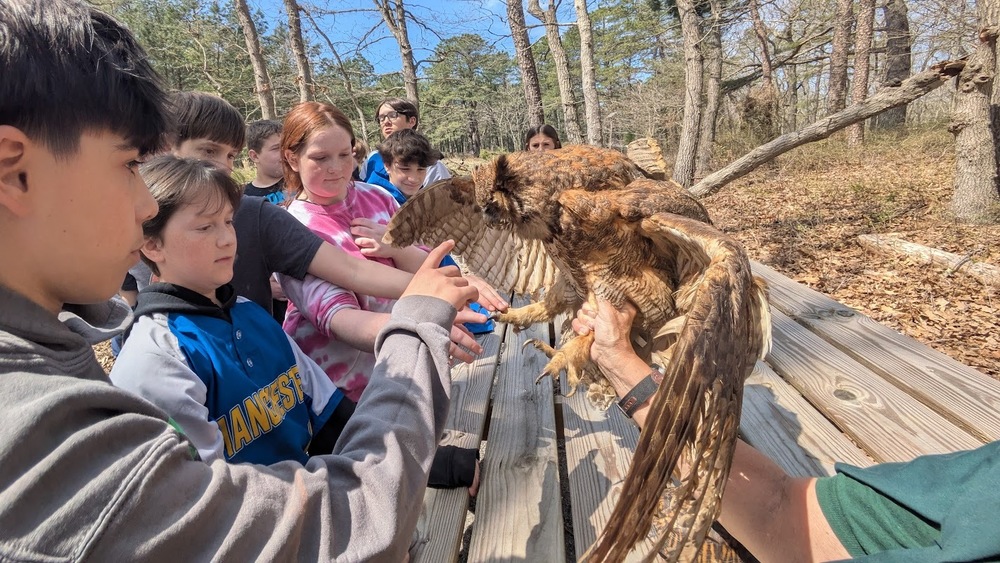
Students in the district’s Eco Explorer Club recently returned to the Forest Resource Education Center in Jackson, NJ, to take their learning beyond the classroom with an immersive field experience. The visit offered another opportunity to connect the science curriculum with real-world environmental observation.
The day began with an interactive session inside the Nature Center, where students were introduced to the rich biodiversity of the New Jersey Pine Barrens. This foundational overview prepared them for two guided outdoor explorations: a Swamp Walk and a Sensory Trail experience, each designed to deepen understanding through direct engagement with the natural environment.
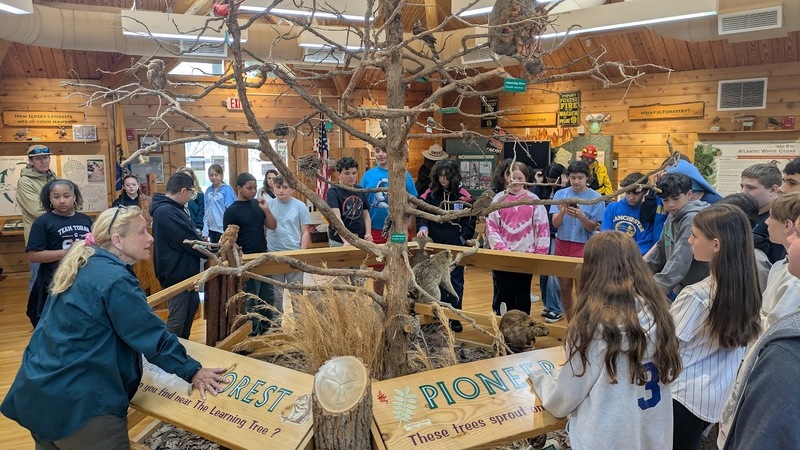
As students moved through the preserve, they examined the distinct ecological characteristics of upland and lowland forests. In the upland areas, sandy soils supported a canopy of pine and oak, while the wetter lowland regions revealed maple and gum species thriving in more saturated conditions. These observations provided a tangible extension of classroom discussions on ecosystems and habitat variation.
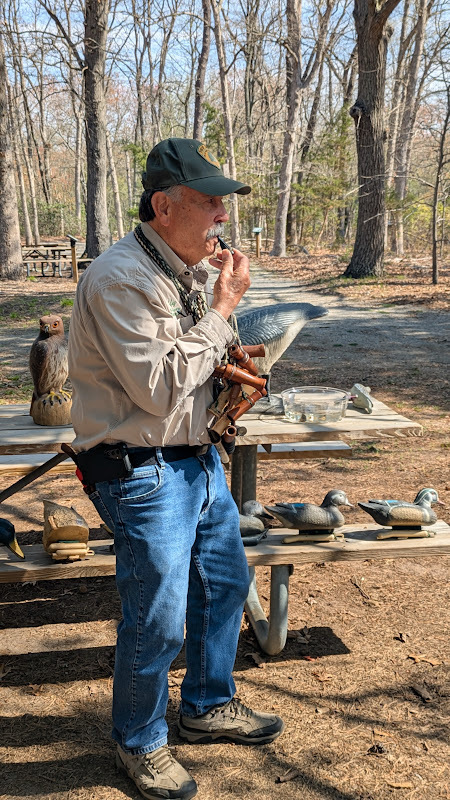
A highlight of the visit included a live demonstration by environmental educator Mr. Duffy, who introduced students to wildlife identification through sound using a series of duck calls. This engaging presentation encouraged careful listening and observation, key skills in field science.
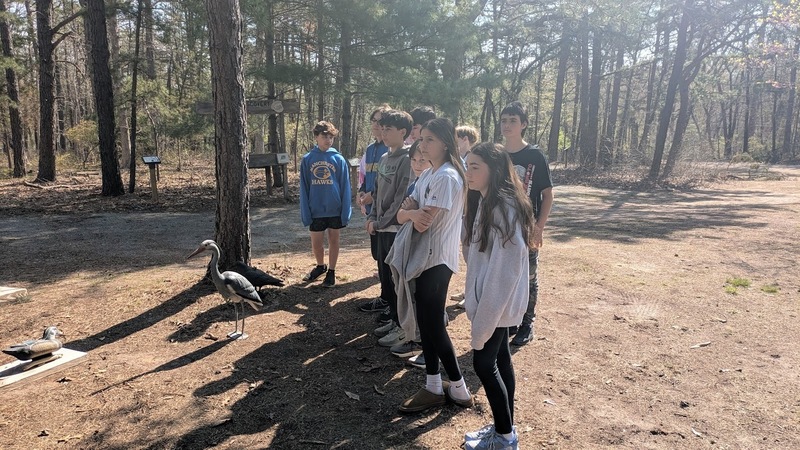
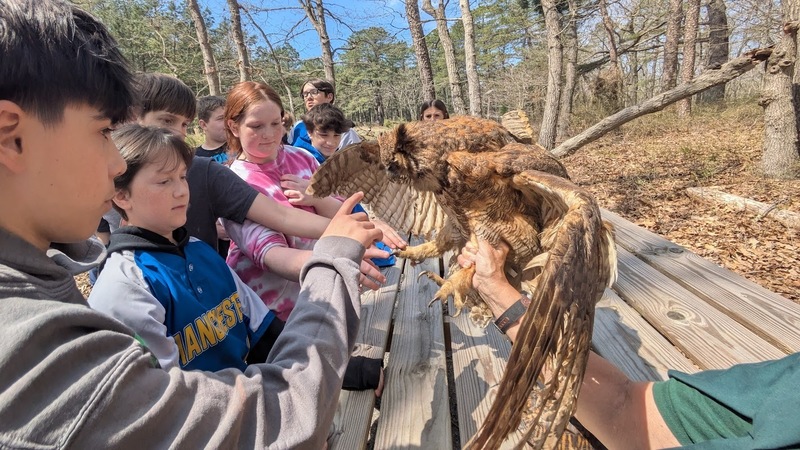
Throughout the excursion, students observed a range of local wildlife indicators, including wood frog tadpoles, a beaver lodge, tree trunks marked by beaver activity, and a fox den located near the trail. These sightings prompted thoughtful discussion about habitat encroachment and the impact of development on native species. Educators used these moments to reinforce the importance of environmental stewardship and responsible land use. Students also learned about trout populations in local streams and the specific environmental conditions required to support them.
In another hands-on activity, students explored dendrochronology by examining a cross-section of an oak tree. By analyzing its growth rings, they discovered the tree began growing in 1772, offering a powerful historical connection that brought both science and social studies to life.
The group also identified several native plant species, including highbush blueberries, cinnamon ferns, and skunk cabbage, further strengthening their understanding of regional ecology.
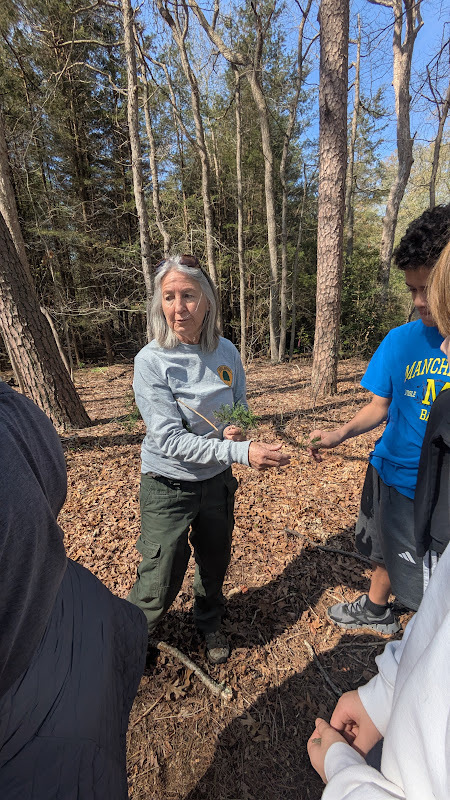
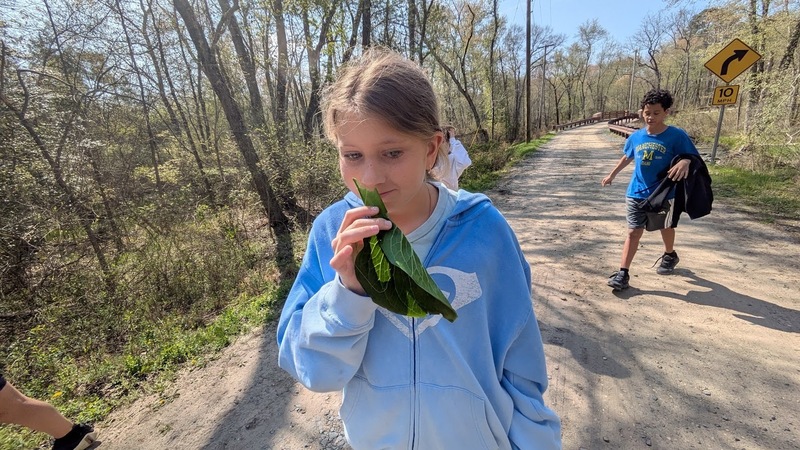
This field experience exemplifies the district’s focus on fostering curiosity, critical thinking, and environmental responsibility. By engaging directly with the natural world, students gained a deeper appreciation for the unique ecosystems of the Pine Barrens and the importance of preserving them for future generations.